BLOG
BLOG
Galerie La Ligne
21 April 2026
Understanding Abstract Art: Form, Colour and Composition in Geometric Abstraction – Part 1
Understanding Abstract Art: Form, Colour and Composition in Geometric Abstraction
We encounter abstract art everywhere today. In museums. In public buildings. In private collections. And yet, for many people, it remains difficult to access. Geometric abstraction, in particular, appears cold or austere at first glance. Lines. Shapes. Colours without recognisable motifs. Many ask themselves: what is it supposed to mean? This is precisely where this text comes in.
This article helps you to better understand abstract art. Step by step. In simple language. We look at how form, colour and composition interact in geometric abstraction. We explain why this art movement plays a central role in modern art. And we show why it remains relevant to collectors, museums and educational institutions to this day.
Institutions and collectors in particular are often seeking guidance. What defines formal art? How does it differ from other abstract movements? And how can its value be communicated? Experience from curatorial practice, such as that gathered at Galerie La Ligne in Zurich, shows that clarity and context are crucial. This text provides exactly that.
What does geometric abstraction really mean?
Geometric Abstraction is a specific form of Abstract Art. It completely dispenses with the depiction of objects. No landscapes. No figures. Instead, clear geometric forms take centre stage. Squares. Circles. Lines. Rectangles. Everything is deliberately chosen.
According to art-historical definitions, this movement uses geometric forms in a non-illusionistic space. This means: there is no depth as in perspective. Everything remains a flat surface. This description can also be found in the art-historical glossary of the Composition Gallery (Composition Gallery). For the viewer, this means a direct confrontation with the picture as an object, not as a window to the world.
For many artists, this reduction was a liberating move. They wanted to create art that is universally understandable. Without cultural symbols. Without stories. Just form and colour. This idea shaped movements such as Constructivism, De Stijl and Concrete Art. Particularly following the upheavals of the early 20th century, order came to be understood as an intellectual ideal.
It is important to note: geometric abstraction is not a mere gimmick. It follows clear rules. Often mathematical. Often systematic. This is precisely what makes it formal art. The effect arises not through narrative, but through order, rhythm and balance. These principles can be analysed, compared and understood across generations.

24.04.26
Order as a visual language – the role of form – Part 2
The role of form: Order as a visual language
Form is the foundation of geometric abstraction. Every line has a purpose. Every surface has a function. Nothing is random. Artists work with a limited vocabulary of basic forms. These forms are easily recognisable and universally understood, regardless of language or cultural background.
Squares often symbolise stability. Circles represent movement or wholeness. Horizontal lines appear calm. Vertical lines appear dynamic. Repetition creates rhythm. Shift creates tension. Diagonals bring additional energy to the image and actively guide the eye through the composition.
This clarity makes the works particularly suitable for educational spaces and museums. Visitors can quickly grasp the structure. Geometric abstraction appears more accessible, particularly when compared to expressive abstract art. Studies on art education show that clear formal systems facilitate understanding.

29.04.26
Colour - a standalone conveyor of meaning- Part 3
Colour as a standalone conveyor of meaning
In geometric abstraction, colour is not merely decorative. It is the substance of the work. Many artists deliberately limit themselves to a few colours – often the primary colours: red, blue and yellow, plus black, white and grey. This selection frequently follows theoretical colour concepts.
This reduction sharpens perception. Small changes in colour become immediately apparent. Contrasts create tension. Harmonies create calm. The effect is direct and physical. Colours can suggest proximity, distance or even temporal sequences within the image.
The design magazine Muroart describes abstract art as an art form that focuses on colours and shapes and their effect on the viewer (Muroart). This is precisely the case here. Meaning arises through seeing, not through explanation.
06.05.26
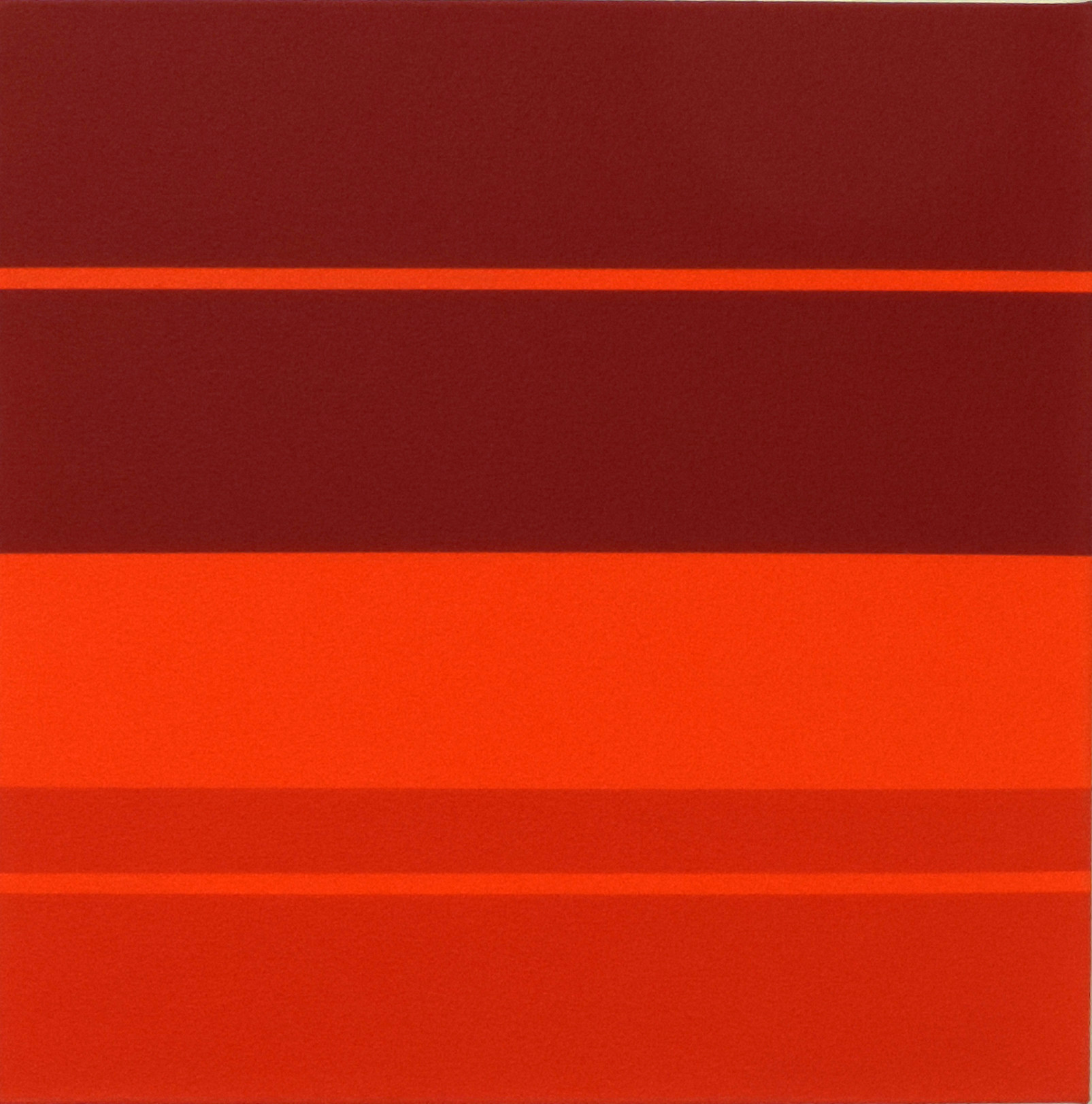
Preparations for the upcoming exhibition ‘Geometric Art of the 20th Century’
13.05.26
Composition: The Invisible Framework - Part 4
Composition is the interplay of all elements. This is where an artist’s mastery is revealed. How are forms arranged? Where does tension arise? Where is there calm? Even the slightest shifts can significantly alter the overall effect.
Many works follow clear systems: grids, series, repetitions. This order is not rigid, but deliberately designed. Small deviations keep the image alive; they prevent monotony and invite the viewer to look more closely.
Museums in particular value this clarity. The works can be easily integrated into thematic exhibitions and are universally understandable. Without translation. This makes them particularly suitable for collections with a global audience and changing exhibition contexts.
A common mistake when viewing art is to search for meaning in a narrative sense. Anyone who asks, ‘What does this depict?’ misses the point. A better question is: ‘How does the interplay work?’ This perspective opens the door to formal logic.
21.05.26
Current developments and institutional perspectives - Part 5
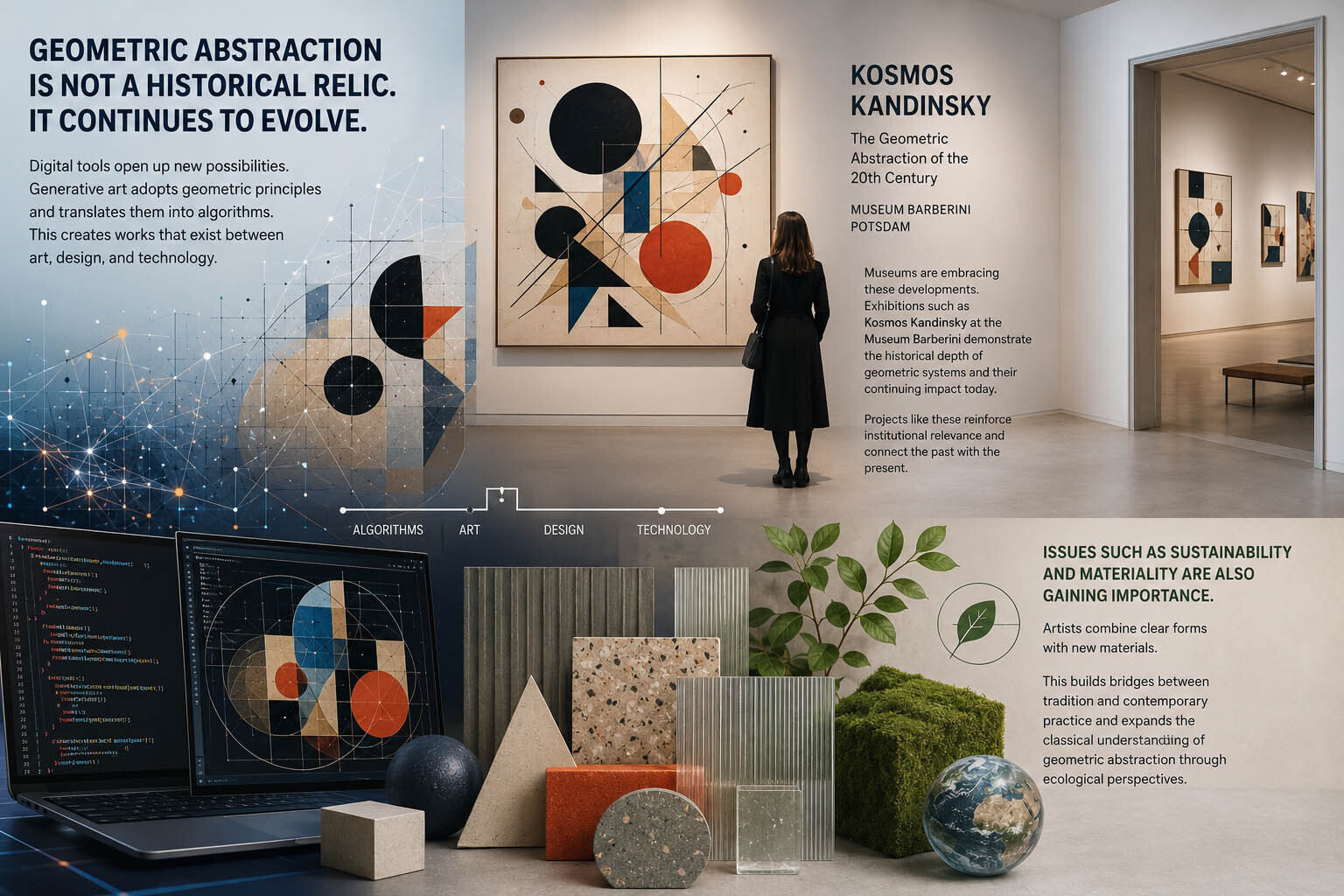
Geometric abstraction is not a historical relic. It continues to evolve. Digital tools open up new possibilities. Generative art takes up geometric principles and translates them into algorithms. This gives rise to works that straddle the worlds of art, design and technology.
Museums are responding to these developments. Exhibitions such as Kosmos Kandinsky at the Museum Barberini demonstrate the historical depth of geometric systems and their impact to this day. Such projects reinforce the institutional significance of the art form and link the past with the present.
Themes such as sustainability and materiality are also gaining prominence. Artists combine clear forms with new materials. This builds bridges between tradition and the present and expands the classical understanding of geometric abstraction to include ecological considerations.
27.05.26
Frequently Asked Questions - Part 6 6
What distinguishes Geometric Abstraction from other forms of abstract art?
Geometric Abstraction works with clear forms and systems. Other abstract movements are often more gestural or emotional. The focus here is more on order, structure and visual logic rather than on subjective expression.
Is Geometric Abstraction part of Modern Art?
Yes. It is a central component of modern art and closely linked to movements such as De Stijl and Constructivism. Many of its concepts continue to influence art and design to this day.
Does colour really play such a significant role?
Yes. In Geometric Abstraction, colour is an independent means of expression and has a decisive influence on the overall effect. Even the slightest colour nuances can alter the entire visual impact.
Is Geometric Abstraction still relevant today?
Absolutely. Digital and generative approaches demonstrate just how relevant geometric principles remain. They shape contemporary art just as much as architecture, graphic design and interface design.
Learning to see clearly and collecting with awareness
Understanding abstract art means looking differently. Seeking less. Perceiving more. Geometric abstraction invites us to do just that. It trains the eye. It organises thoughts. And it remains open to new interpretations, even beyond historical contexts.
For collectors, museums and educational institutions, it offers a solid foundation. Historically grounded. Timeless in its impact. Those who engage with form, colour and composition discover a quiet yet powerful language. Now is the right moment to rediscover this language and consciously integrate it into collections and educational programmes.
03.06.26
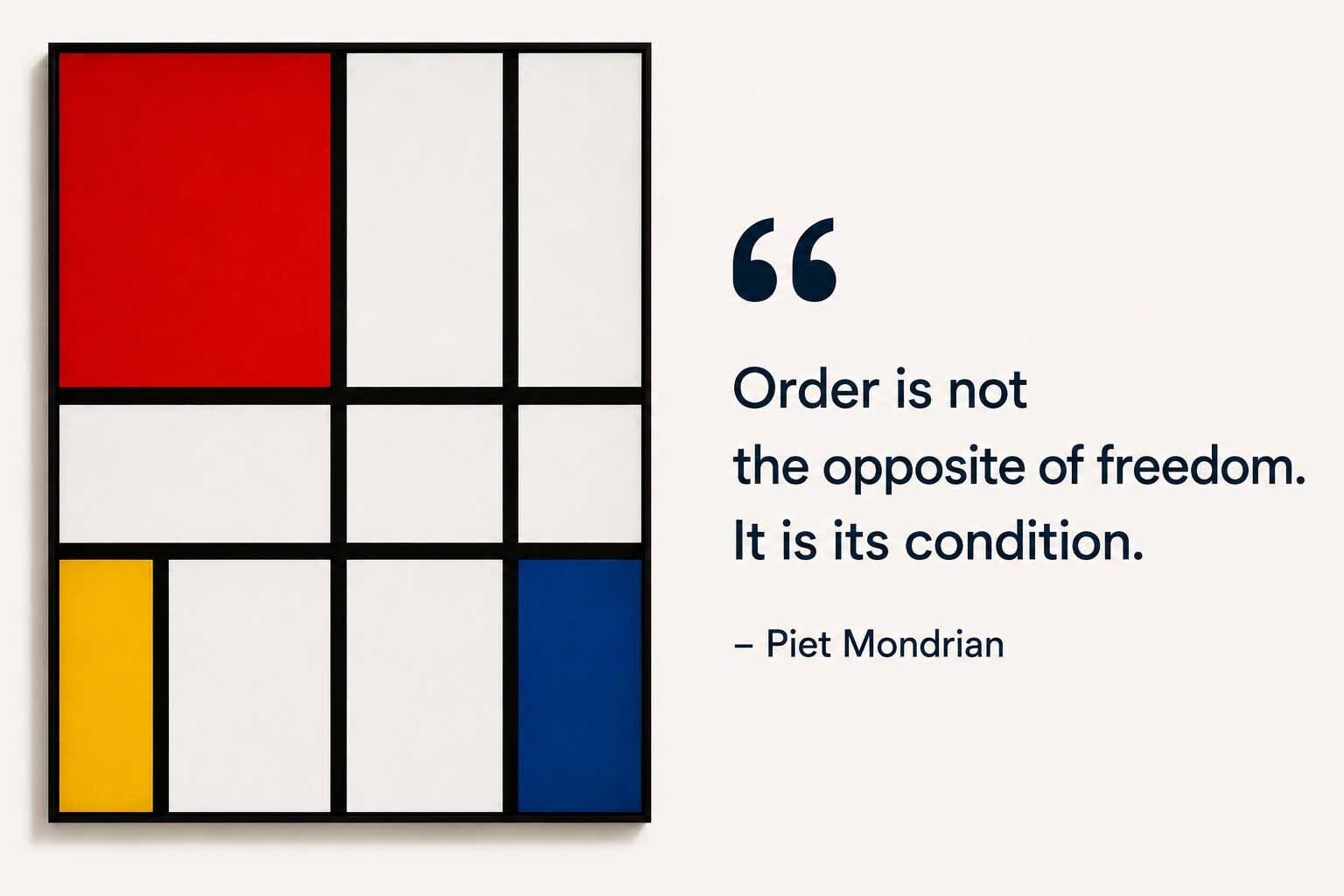
Sonia Delaunay - "Projet de tissus" - Fabric project

Extract from the text in the catalogue of the exhibition at the Musée de Lodève by Annette Malochet (Art historian)
"No, strictly speaking it is not a series of "tissue projects" as has often been said, either out of mental laziness or because Sonia Delaunay did not want to develop enough the theoretical meaning of all her "colour ranges", even though many of her gouaches were used, often well afterwards, for the publication of certain fabrics. We can therefore imagine how - and why - it was possible for certain research series to be called "projects" when this was chronologically and, worse, conceptually wrong.
What the artist subsequently wrote about this period has certainly been read too lightly:
"In 1923, I was approached by a house in Lyon interested in drawings by tissues. I produced 50 drawings in colour with pure, rhythmic geometric shapes. For me, they were and remain colour scales, the basis of the essential concept of our painting (Robert's and mine). All this would compare to a great deal of research and study. My research was purely pictorial and was a plastic discovery which then served both of us for our painting." .»
13.06.26
Geometric art as a universal language
Geometric art is often described as the universal language of the visual arts, as it is based on forms and structures that can be understood regardless of culture, origin or language. Circles, triangles, squares and symmetrical patterns are fundamental elements found in almost every culture around the world. We encounter them in nature, in architecture, in scientific models and in traditional ornamentation. As a result, geometric art possesses a special ability to appeal to people across geographical and cultural boundaries.
Unlike representational art, which frequently refers to specific motifs or cultural symbols, geometric art focuses on fundamental visual principles such as order, rhythm, balance and proportion. These elements can be perceived by viewers regardless of their linguistic or cultural background. A harmonious pattern or a balanced composition often evokes similar aesthetic responses, even if individual interpretations may differ.
Furthermore, geometry plays a central role in many areas of human life. Mathematical forms and structures form the basis of scientific discoveries, technical developments and architectural constructions. Geometric art takes up these universal principles and transforms them into visual forms of expression. This creates a connection between art, science and everyday life that can appeal to people in different ways.
In the 21st century, this universal dimension is gaining further significance. In a globalised world where people from different cultures are increasingly interconnected, geometric art offers a shared visual language. Digital media and international art platforms make it possible to disseminate geometric works worldwide and make them accessible to a diverse audience. The clarity and comprehensibility of geometric forms facilitate intercultural exchange and foster new perspectives on art and design.
Geometric art thus demonstrates that creative forms of expression are not necessarily bound to language. By reducing itself to fundamental forms and structures, it creates a space in which people can engage in dialogue with one another regardless of their origin or cultural context. It is precisely this universal comprehensibility that makes it one of the most timeless and, at the same time, most modern art forms of our time.
19.06.26
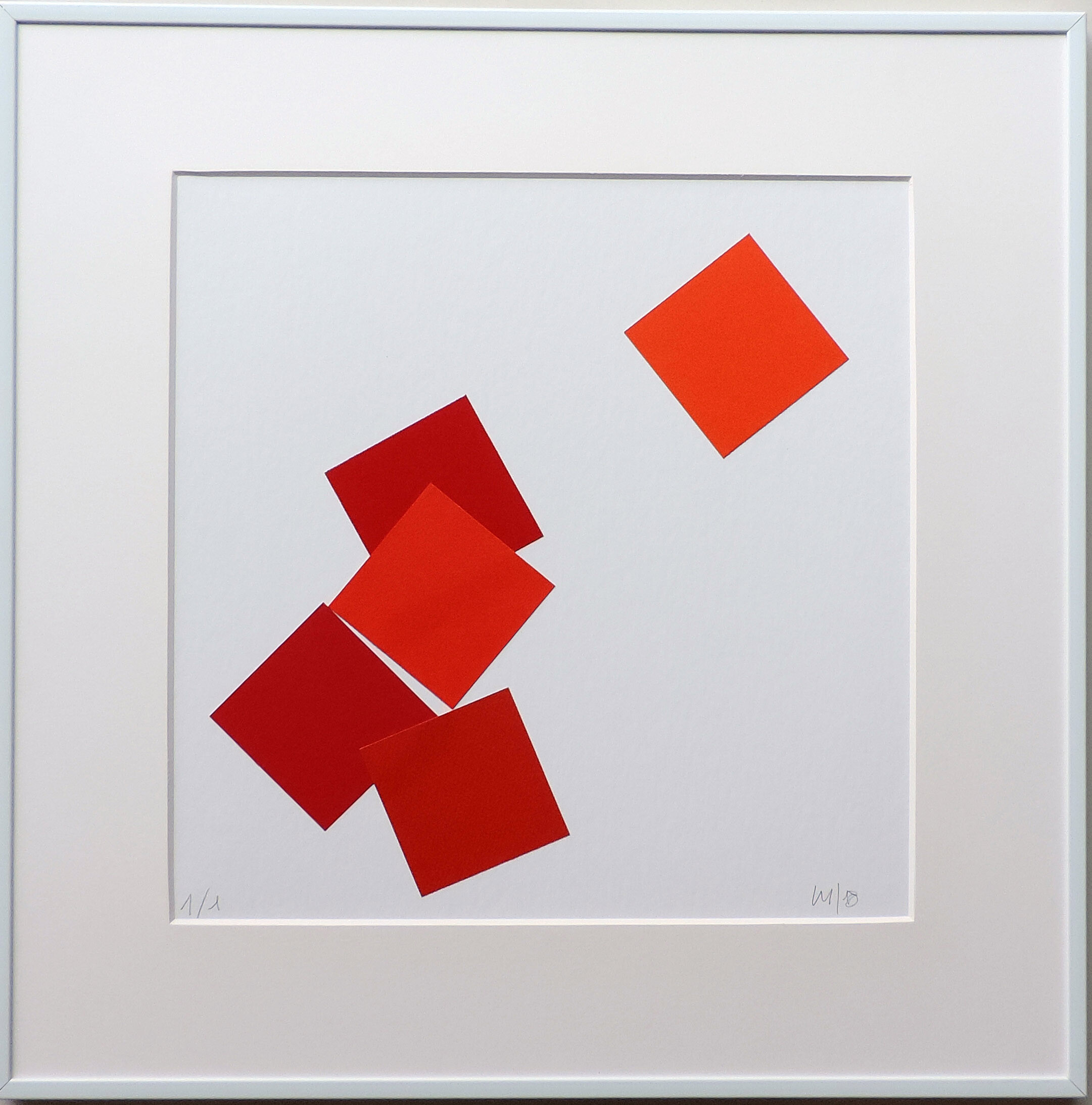
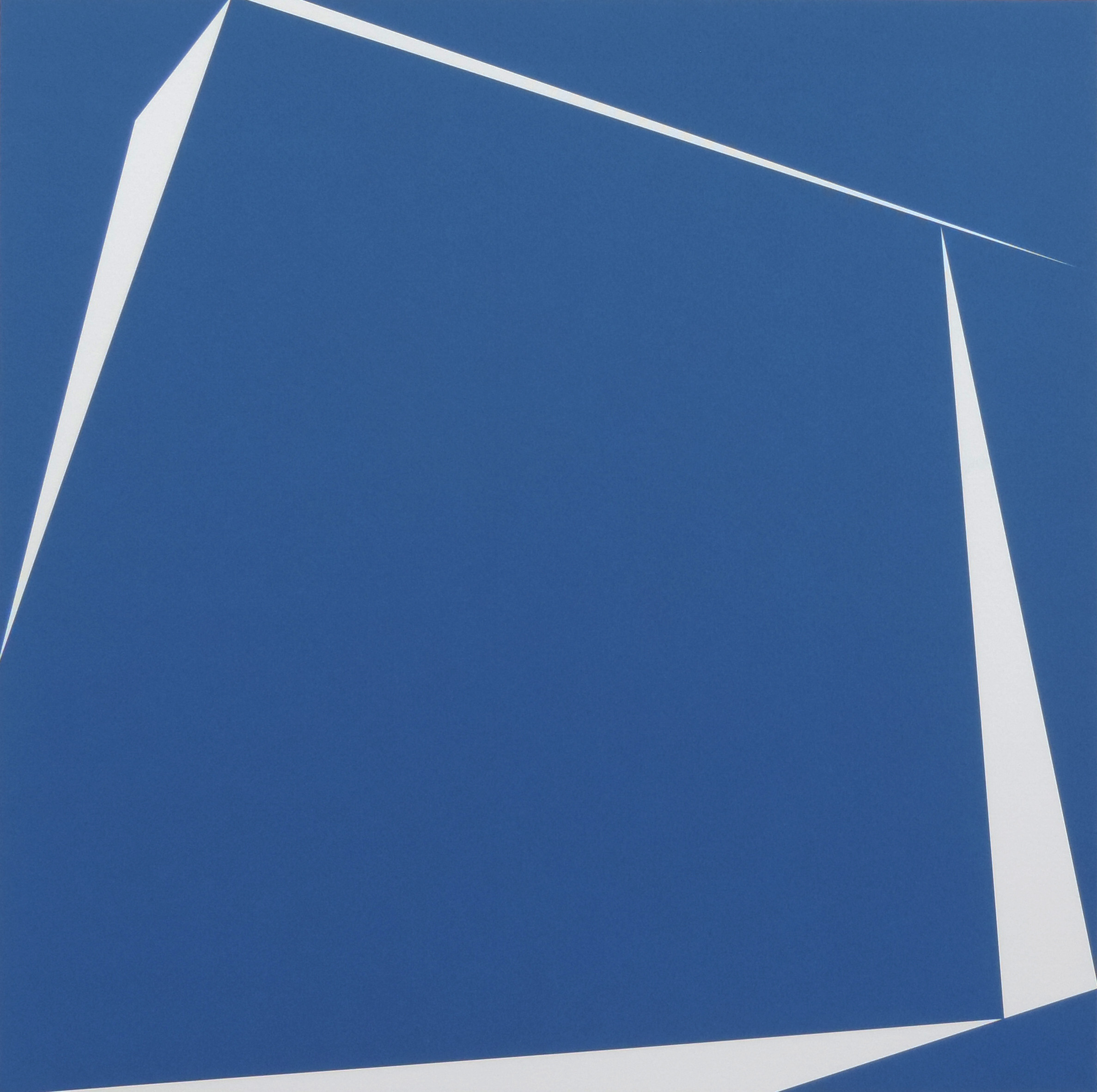
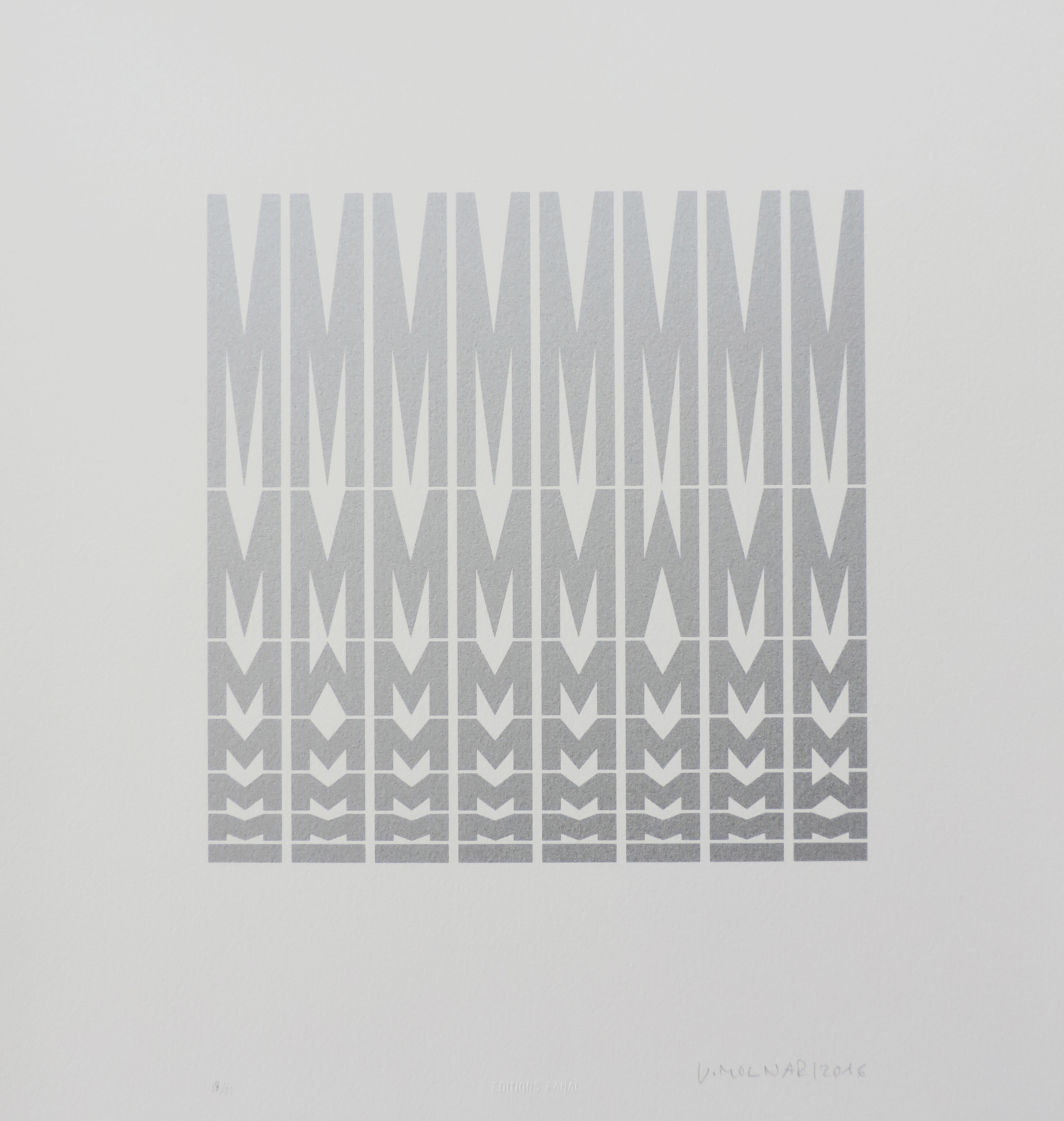
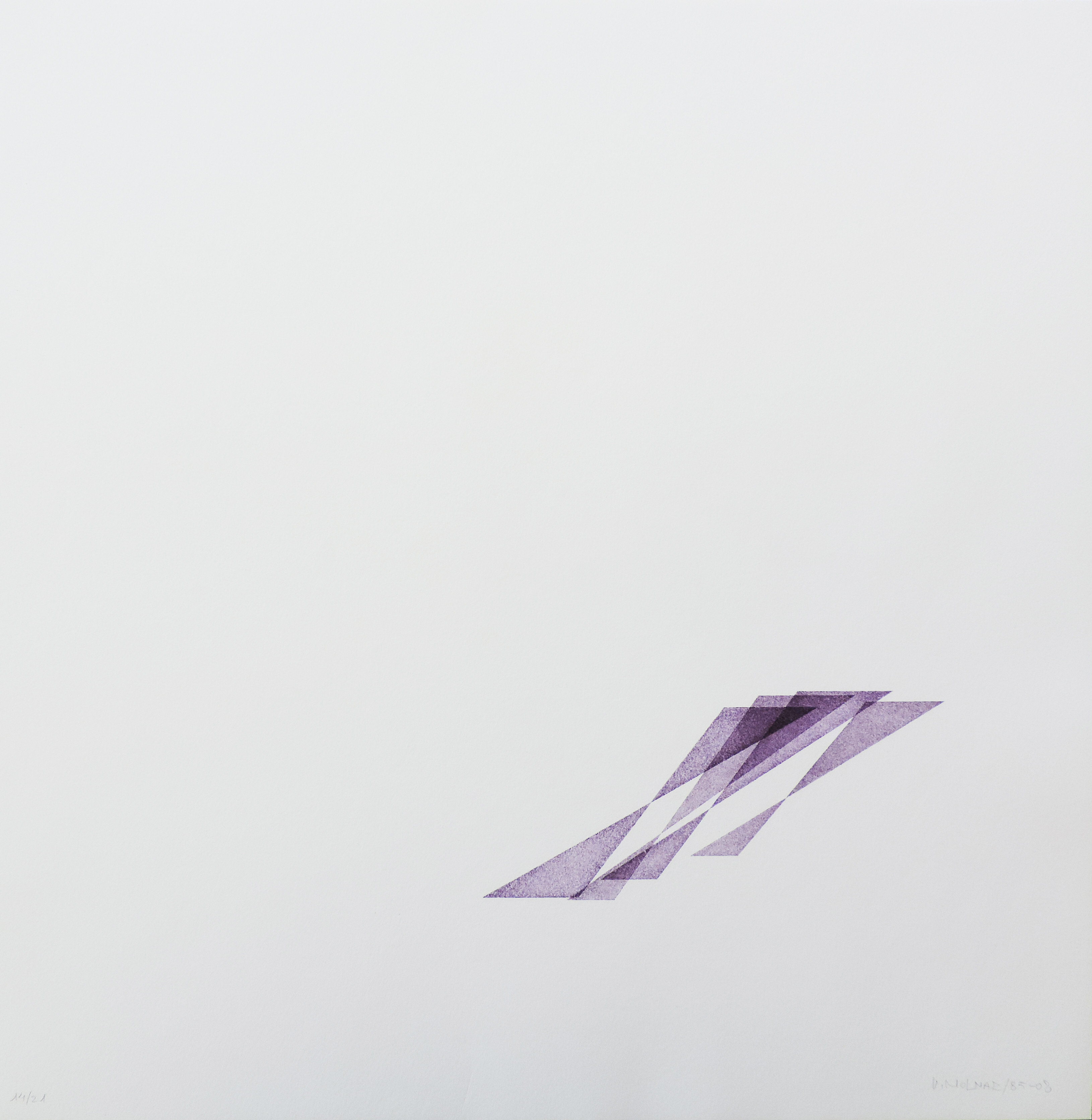
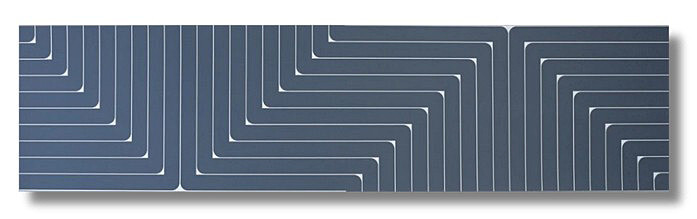
«Vera Molnar. Möglichkeiten» Exhibition at the Kunstmuseum Basel
At the Kunstmuseum Basel, the exhibition ‘Vera Molnar. Possibilities’ offers an insight into her work in printmaking. On display are 28 prints from 1991 to 2023, created by Éditions FANAL Basel.
The exhibition highlights Molnár’s interest in the infinite possibilities of geometric forms and her experimental use of computer technologies. A wonderful exhibition of Vera Molnar’s prints.
This website uses cookies. Here you can choose which cookies you want to accept and change your selection at any time. If you click on 'Agree', you agree to the use of cookies.